


ROBYN HUNT
Certified Car Seat Technician
Registered Counsellor
Mom of 2
At Precious Cargo, we recommend that children remain rear facing until at least four years old (preferably even longer if your car seat allows this), a recommendation supported by safety experts and backed by science. Studies have found that rear facing is 500% safer than forward facing in the event of a collision. This is because rear facing seats better support and protect a child’s head, neck, and spine; areas that are still developing and especially vulnerable to injury.
Many parents feel tempted to turn their child forward facing sooner than recommended; and it’s understandable. Concerns about legroom, comfort, visibility, or even pressure from well-meaning friends and family can make rear facing seem restrictive or unnecessary after a certain age. Add to that common myths; like the idea that bigger toddlers are “too tall” to stay rear facing- and it’s easy to see why confusion persists.
As car seat safety has evolved, most toddler car seats can be used rear facing until 4 years old and there are even a few that can be used rear facing until 6-7 years old!
In this blog article, we’ll address those concerns and debunk the most common rear facing myths, using evidence-based guidance to show why staying rear facing longer is not only safer, but the best choice for your child.

DEBUNKING THE MOST COMMON REAR FACING MYTHS
Below is a list of the most common reasons that parents want to turn or have turned their children from rear facing to forward facing along with an explanation as to why they are myths and rarely legitimate reasons to turn your child around before it is safely ready to do so:
1. “My child’s legs are too long”
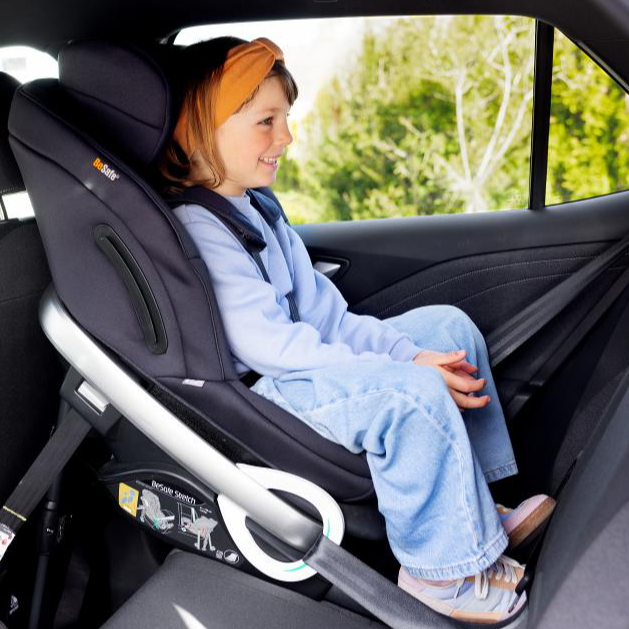
One of the most common concerns parents have is that their child’s legs look “too long” or “too uncomfortable” to stay rear facing, especially as toddlers begin to bend their knees or rest their feet against the vehicle seat. While it may look uncomfortable to adults, children are naturally flexible and often prefer these positions (even when playing at home).
Parents may also be concerned that their child’s legs may get injured in an accident if rear facing but research actually shows that there is a much higher risk of leg injuries when forward facing!
In a collision, when rear facing, the force of the crash pushes the child back into the seat, causing their legs to naturally move inward toward their body rather than being thrown forward (as would happen if they are forward facing). This motion helps absorb and distribute crash forces across the stronger parts of the body, while keeping the head, neck, and spine well supported. As a result, the position of the legs in a rear facing seat does not pose a danger. In fact, it’s part of how the seat protects the child as a whole.
Even if a child were to suffer a broken leg in a rear facing seat, it would be much less severe than the head, neck, and spine injuries that could result from turning a child forward facing too soon.
At Precious Cargo; we sell two extended rear facing car seats with the ability to give your child more leg room as they grow. Although not needed; it may put parents minds at ease to have the option! These are the BeSafe Stretch and the BeSafe Beyond 360.


2. “My child suffers from car sickness when rear facing”
Another common worry is that rear facing might make children more prone to car sickness. In reality, motion sickness is quite rare in babies and toddlers because the part of the inner ear that controls balance (vestibular system) is still developing. Most young children simply don’t process motion in a way that triggers nausea. If anything, car sickness tends to appear later in childhood, regardless of seat direction.
Research published in the Journal of Public Health highlights that "rear facing does not increase motion sickness. Instead, individual susceptibility, visual input, and environmental factors play a more significant role."
It’s true that some parents notice symptoms improve when a child is turned forward facing, largely because the child can see the road ahead and better align what they feel with what they see. However, this potential improvement needs to be weighed carefully against safety. Rear facing remains significantly safer, especially for the head, neck, and spine in a crash. In many cases, simple adjustments, like ensuring good airflow, avoiding heavy meals before travel, taking breaks, or providing a clear view out of the side window can help manage mild car sickness while keeping a child in the safest rear facing position for longer.
If your child starts experiencing nausea or vomiting; it is worth taking them to the doctor for a check up. Common causes are usually reflux (in babies) and ear infections which need to be treated before considering forward facing your toddler.


3. “I can’t see my child when they are rear facing”
Many parents also worry that they won’t be able to see their child while they are rear facing, which can feel unsettling, especially on longer trips or if you are driving alone. The good news is that there are crash-tested rear seat mirrors specifically designed for this purpose. These mirrors attach securely to the vehicle seat headrest and allow you to see your child clearly through your rear-view mirror without needing to turn around while driving. This provides reassurance and peace of mind, while still keeping your child in the safest rear facing position.
Some children may become upset when they can’t see their parent while travelling rear facing (especially around 9 months old when separation anxiety sets in), which can make journeys stressful for everyone. In certain cases, and only if absolutely necessary, the car seat may be installed on the front passenger seat with the airbag turned OFF (if permitted by you vehicle and car seat manuals). However, this should always be a last resort, as the front passenger seat is statistically the most dangerous seating position in the vehicle.
Find our collection of crash tested car seat mirrors here


4. “My child dislikes rear facing”
Many parents who want to turn their child forward facing express that their child simply “doesn’t like” rear facing, but this is often a major misconception. For most children; especially if moving from the infant seat to the toddler seat, rear facing is all they have ever experienced, and they have no awareness that forward facing is even an option or that anything different exists. Because of this, their reaction to the car seat is rarely about the direction they are facing. When a child becomes unsettled or upset, it is usually linked to other, more practical factors.
Often, discomfort plays a big role. The seat may need to be adjusted as the child grows- headrest height, harness position, or recline angle can all impact comfort. In some cases, the seat may have been outgrown and no longer fits the child properly. At other times, children simply go through phases where they resist being strapped in, as they naturally seek independence and dislike being restricted. It’s also common for frustration, boredom, tiredness, or hunger to show up as resistance in the car.
By looking beyond the assumption that rear facing is the problem, parents can usually identify and resolve the real cause of the discomfort. Small adjustments, ensuring a proper fit, and meeting the child’s needs before a trip can make a significant difference; allowing them to remain safely rear facing while also being more content in their seat.


5. “My child’s paediatrician said that my child can forward face”
Some parents are told by paediatricians that it’s fine to turn their child forward facing, which can understandably feel reassuring, but this advice is not always aligned with the most up-to-date car seat safety recommendations. While paediatricians are experts in child health, they are not always specifically trained or regularly updated in the rapidly evolving field of car seat safety.
Current best practice, supported by science and ongoing crash testing, clearly recommends keeping children rear facing for as long as possible, ideally until at least four years old. For the most accurate guidance, it’s important for parents to refer to certified car seat technicians (at Precious Cargo) and evidence-based research that focuses specifically on car seat use.


6. “My car is too small to accommodate a rear facing car seat”
Another concern that some parents have is that their car is too small to accommodate a rear facing car seat, but this is not always the case. Car seats vary significantly in design, and some models are specifically made to be more compact and fit well in smaller vehicles.
The recline angle also plays an important role. Newborns require a more reclined position, but as children grow, the seat can often be installed more upright, taking up less space.
It’s also important to remember that forward facing seats require a safety gap of at least 55 cm between the car seat and the seat in front to prevent the child’s head hitting the front seat in an accident.
When you book a consultation at Precious Cargo, we physically test the car seats in your vehicle to make sure they will fit safely.


7. “What happens if my child is rear facing in a rear-end collision”
Another worry some parents may have is that rear facing may be less safe in a rear-end collision, but this is not the case. Rear-end crashes typically occur at much lower speeds than frontal or side-impact collisions and often involve both vehicles moving in the same direction, which reduces the forces involved. In these situations, a rear facing seat still supports and protects the child effectively.
The most severe and dangerous crashes are frontal impacts, and rear facing seats offer superior protection in these high-force scenarios by cradling the child’s head, neck, and spine. This is why rear facing remains the safest position overall, even when considering rear-end collisions.

8. “My child is big for his/her age so they are ready to forward face”
While your child may be physically heavier and/or taller for their age, even if they are on the 99th percentile, their skeletal and muscle development still progresses at the exact same rate as a child who is on the 1st percentile for weight and height.
Baby’s are born with cartilage in their necks and that cartilage only starts turning into bone (a process called ossification) FROM the age of 2 years old and is only likely to be completed around 7-8 years old. This means that if a child is forward facing in an accident, the whiplash from the crash forces can result in serious spinal and/ head injuries.
Therefore, even if your child is bigger than average, the risk of forward facing too soon still applies and they should remain rear facing until at least 4 years old.

Credit: www.safeseat.org
9. “Extended rear facing car seats are too expensive”
While there are some extended rear facing seats that are very expensive (because they last a lot longer than other toddler seats on the market and offer additional features), in the past few years since the new i-Size regulation was introduced, the majority of car seat manufacturers are producing toddler car seats that allow rear facing until at least 18kgs or 105cm. This is the size of an average 4 year old.
In South Africa, you are able to purchase ECE R129 i-Size approved (minimum safety standard that all car seats MUST meet to be sold) extended rear facing car seats at relatively affordable prices.
However, At Precious Cargo, we ONLY sell car seats that have met the legal safety standards AS WELL AS been independently crash tested by ADAC and/or Swedish Plus Test AND score well for safety in these crash tests.

Conclusion
When it comes to car seat safety, the evidence is clear: rear facing is the safest way for young children to travel. While it’s natural for parents to have questions or concerns, most of the common reasons for turning a child forward facing are rooted in myths or misunderstandings rather than real safety issues. In almost all cases, rear facing will always provide better protection, particularly for a child’s head, neck, and spine in a crash.
There are very few situations where turning a child forward facing earlier than recommended is truly necessary. Even if a child has already been turned forward facing, it’s never too late to switch them back, returning to rear facing can immediately improve their level of protection.
By focusing on the facts and making informed choices, parents can feel confident that keeping their child rear facing for longer is one of the simplest and most effective ways to keep them safe on every journey.
If you are looking for a high scoring extended rear facing car seat for your little one; book an in-store or online video consult with one of our certified car seat technicians at Precious Cargo. We will help you choose the best car seat for your little one based on your vehicle, budget, and your lifestyle!


